

Hollow Fibre Membrane (HFM) Solutions
Guaranteed Compliance. Versatile Hollow Fibre Solutions
Envirogen offers a comprehensive range of hollow fibre membrane (HFM) treatment skids, providing an extremely versatile and effective method for removing contaminants from liquids. Our technology-agnostic approach delivers value-engineered solutions, providing performance guarantees to reduce your risk and ensure reliable environmental management that aligns with both your regulatory and budgetary goals.
Whether you require the separation of large particles or the rejection of dissolved molecules as small as 0.001µm, our engineers recommend the optimal system for your unique process.
Ready to future-proof your filtration assets and optimise your process?
Request a Free Consultation Today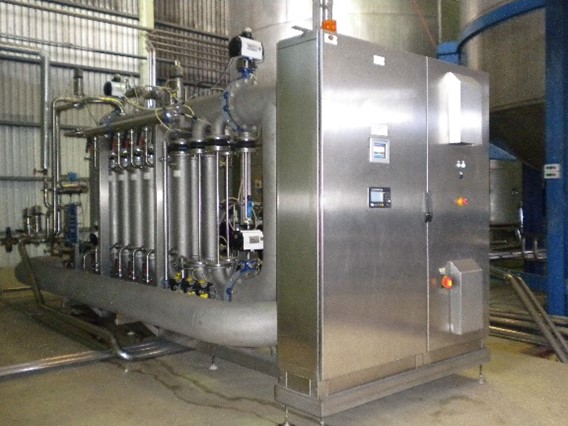



End-to-End Solutions: Engineering Efficiency Across the Full Project Lifecycle
When regulations tighten and budgets shrink, you need a partner with definitive experience. Envirogen provides cradle-to-grave technology and service solutions designed to ensure lasting operational and capital efficiencies across your asset’s entire lifecycle. We deliver reliable environmental solutions by integrating our technical expertise with a deep understanding of your facility’s operational needs.
We deliver value-driven HFM solutions across the full project lifecycle:
- Cooperative Design & Problem-Solving: We support customers in developing robust, customised solutions for complex applications. We evaluate your liquid characteristics and quality requirements to design the most efficient filtration configuration.
- Design & Build: We provide custom, efficient, and reliable treatment systems, available in compact, ready-to-install skid designs.
- Operations, Service, & Maintenance: Ensure continuity with comprehensive support, including full-time O&M staffing, routine service contracts, and emergency response.
De-Risking Your Project: Our Technical Edge We ensure your investment is future-proof by employing pilot plant trials to rigorously stress-test processes and validate full-scale implementation. This establishes the operational limits that guarantee performance before you break ground on a full-scale commercial system.
Advanced Hollow Fibre Systems for Every Contaminant Challenge
Hollow fibre membranes are fine filters that act as selective membranes to remove particles based on their size and molecular weight cut-off (MWCO). We offer three main types of HFM filtration, each classified according to the particles they reject.
Operating Modes for Maximum Efficiency:
- Dead-end Filtration: The full feed flow is directed to the membrane without recirculation. This reduces pumping demand and lowers operational energy (OPEX), making it ideal for liquids with lower particle loads.
- Crossflow Filtration: High-velocity recirculation prevents cake build-up on the membrane surface. This is the preferred solution for complex and challenging feed streams, enabling longer continuous operations.
Dead-end filtration
In dead-end operation, the full feed flow is directed to the hollow fiber membrane without the use of recirculation and without concentrate being remoed. The suspended solids within the feed flow are deposited on the surface of the membrane, to form a cake layer which itself starts to act as a filter.

With no need to recirculate retentate, dead-end filtration reduces pumping demand, which lowers the amount of operational energy needed. Dead-end filtration is often used for liquids with lower particle loads. For higher particle loads, membranes with a high surface area can be used to maintain low flux rates and allow the filtration cake to form on the surface. The velocity of the feed flow and the surface area of the membrane needs to be carefully designed and controlled to prevent a deeper build-up of particulate matter. Failure to install a suitable amount of surface area can result in a deeper build-up of particulate matter resulting in higher transmembrane pressures and even irreversible fouling on the membrane.
Dead-end filtration is often the operating preference in ultrafiltration and is commonly used to treat surface waters or as a pre-treatment stage for further treatment processes.
Crossflow filtration
To enable a crossflow membrane configuration, a retentate return feed and a recirculation loop are created. The feed flow is sent to the membrane via a recirculation loop to maintain high velocity through the hollow fiber membrane lumen. Larger particles are retained within the retentate liquid and the smaller molecules can pass through into the filtrate. A small proportion of the filtrate is passed back to the feed vessel to prevent excessive levels of solids building up within the membrane lumen.

Crossflow filtration illustration
Once a crossflow velocity is achieved, the force of the retentate flow prevents particulate build-up on the membrane surface. By removing the build-up, trans-membrane pressures are reduced and longer batch runs can be achieved.
Crossflow filtration systems are often used in batch processes and for more complex and challenging feed streams. Microfiltration, using a crossflow configuration, is an ideal solution for product clarification and is widely used in breweries, wineries and in the production of cider, vinegar and fruit juices.
The energy requirements associated with achieving crossflow velocity mean that a limited amount of surface area can be installed while maintaining acceptable operational expenditure (OPEX) values for the lifecycle of the systems. Crossflow membrane units will generally have a reduced surface area which means there are fewer lumens to drive the process stream through, this means that lower flow rates result in higher velocity.


An Envirogen hollow fiber membrane filtration system
Credibility Through Performance: High-Efficiency Separation
Our commitment to guaranteed outcomes is backed by reliable, warrantied results across diverse industrial sectors.
- Single-Step Replacement: Our innovative PureSep NF can serve as a single-step replacement for multiple process stages, including coagulation, clarification, and ultrafiltration, delivering significant carbon footprint reductions.
- Market-Leading Permeability: PureSep UF membranes are constructed from a blend of hydrophilic polymers, providing exceptional permeability and optimum back-pulse performance.
- High Fouling Resistance: Our direct nanofiltration systems offer high resistance to fouling with no pre-treatment required, further reducing total expenditure (TOTEX).
Hollow fiber membranes for a range of applications
There are three main types of hollow fiber membrane filtration, each offering its own benefits for different applications and each classified according to the molecular weight of the particles that it allows into the resulting filtrate.
We offer solutions based on each of these main types:
PureSep UF ultrafiltration technology
Envirogen’s PureSep UF range is operated in a dead-end filtration mode and uses 462.8ft2 (43m2) hollow fiber membranes in an inside to outside configuration to optimum back-pulse performance. Each hollow fiber membrane is constructed from a blend of hydrophilic polyethersulphone (PES) and polyvinylpyrrolidone (PEV), providing market-leading permeability rates. Available either as 150 kilodalton (kDa) or 10kDa molecular weight cut-off (MWCO) ratings, they deliver excellent removal of suspended solids, bacteria, and log 4 reduction of viruses.
Envirogen PureSep UF systems come ready-to-install in a compact skid design. Back-pulsing and chemically enhanced back-pulsing equipment are also supplied as standard.
For more information on PureSep UF and bespoke ultrafiltration technology, contact our expert team.
PureSep MF microfiltration technology
Envirogen’s PureSep UF range is operated in a dead-end filtration mode and uses 462.8ft2 (43m2) hollow fiber membranes in an inside to outside configuration to optimum back-pulse performance. Each hollow fiber membrane is constructed from a blend of hydrophilic polyethersulphone (PES) and polyvinylpyrrolidone (PEV), providing market-leading permeability rates. Available either as 150 kilodalton (kDa) or 10kDa molecular weight cut-off (MWCO) ratings, they deliver excellent removal of suspended solids, bacteria, and log 4 reduction of viruses.
Envirogen PureSep UF systems come ready-to-install in a compact skid design. Back-pulsing and chemically enhanced back-pulsing equipment are also supplied as standard.
For more information on PureSep UF and bespoke ultrafiltration technology, contact our expert team.
PureSep NF nanofiltration technology
Our innovative PureSep NF system takes filtration to a new level with its unique, direct nanofiltration hollow fiber membranes, manufactured from polyethersulfone. PureSep NF offers the additional benefit of reducing conductivity in feed streams by rejecting larger dissolved molecules, thanks to its 400 & 800 Dalton (Da) MWCO options.
Envirogen PureSep NF is a direct nanofiltration system and can be used as a single-step replacement for multiple process stages, including coagulation, clarification, sand filtration, ultrafiltration and reverse osmosis. Our nanofiltration plant has a low chemical requirement and delivers significant energy savings and carbon footprint reductions too, when compared with conventional technologies, such as reverse osmosis, adsorption and oxidation.
PureSep NF is an excellent choice for surface water treatment and waste stream recycling, providing rejection of dissolved solids with a fraction of the energy needed for comparable spiral wound reverse osmosis processes. Each hollow fiber membrane offers high fouling resistance with no pre-treatment.
For more information on Envirogen PureSep NF and bespoke nanofiltration technology, contact our expert team.
The Path to Sustainable Compliance Starts Here
Discover how our focus on Lifecycle Costs (TOTEX) and expert hollow fibre membrane engineering can help your facility save energy, water, waste, and money. Take the next step with our expert team to solve your complex separation and water quality challenges.
Contact Us Today for a Free Consultation
North America Head Office
Envirogen Technologies
700 Rockmead Drive, Suite 100
Kingwood, TX
77339
T: 877 312 8950
United Kingdom Head Office
Envirogen Group
Unit 9, Wimsey Way
Alfreton Trading Estate
Alfreton, DE55 4LS
T: +44 (0) 1773 441029
Europe Head Office
Envirogen Technologies bv
Penningweg 71
1507 DG Zaandam
The Netherlands
T: +31 75 204 7200